
The complete guide
Choosing a Cordless Leaf Blower for Everyday Garden Clearing
When leaves turn a quick tidy into a chore
A few scattered leaves are easy to ignore. Once they cover a path or collect around garden furniture, clearing them becomes another job on the list. A broom still has its place, but moving loose material into one area with a blower can be a useful first step.
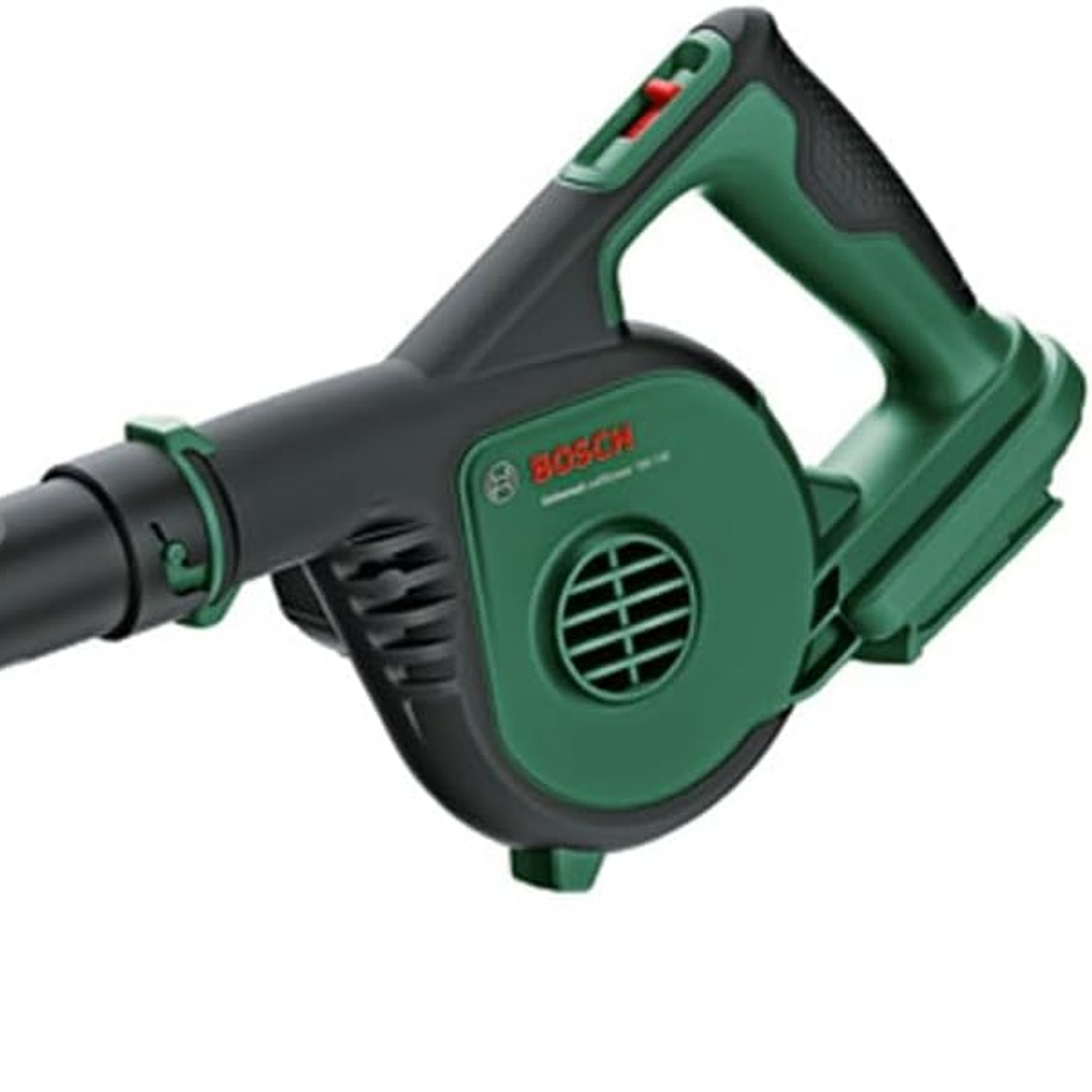
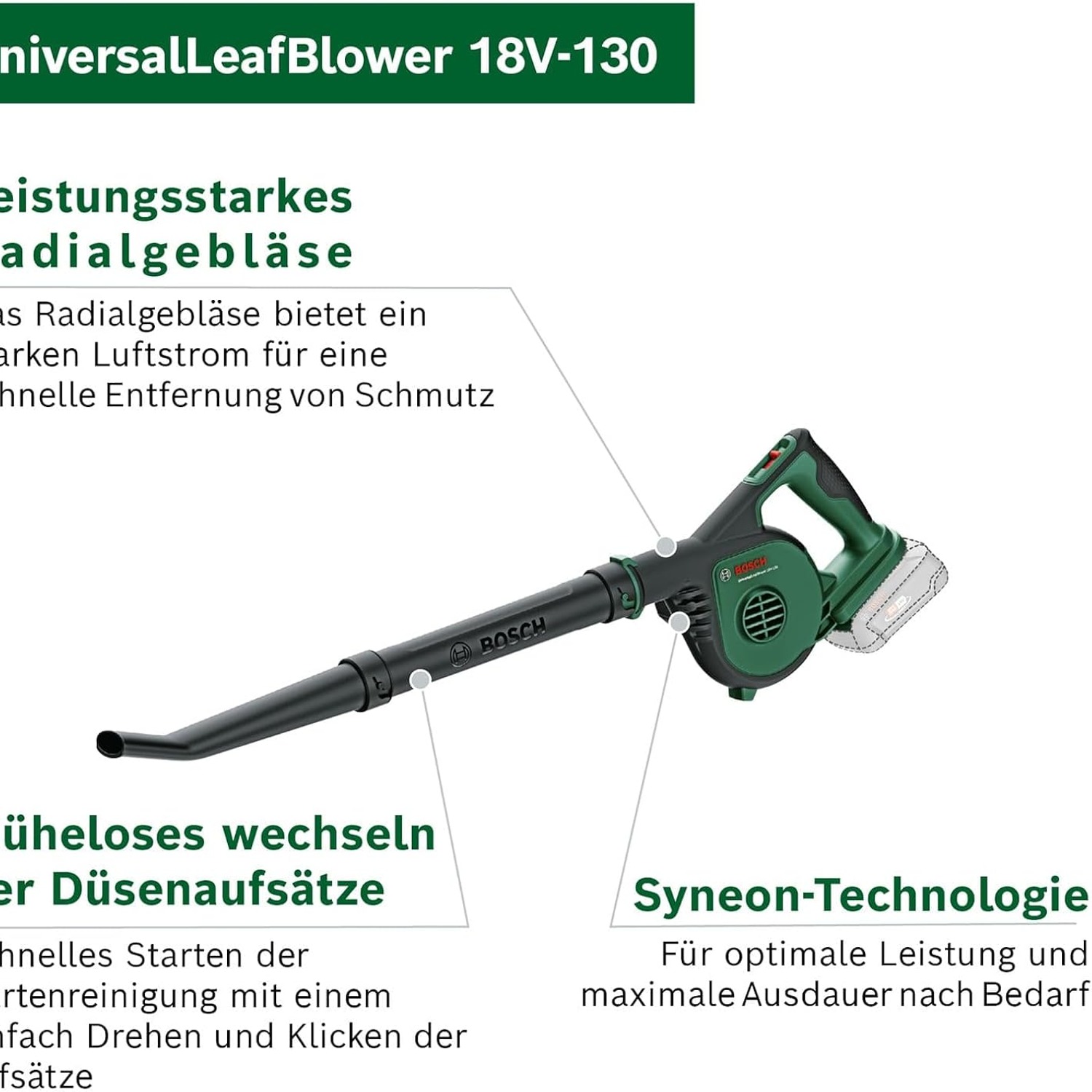
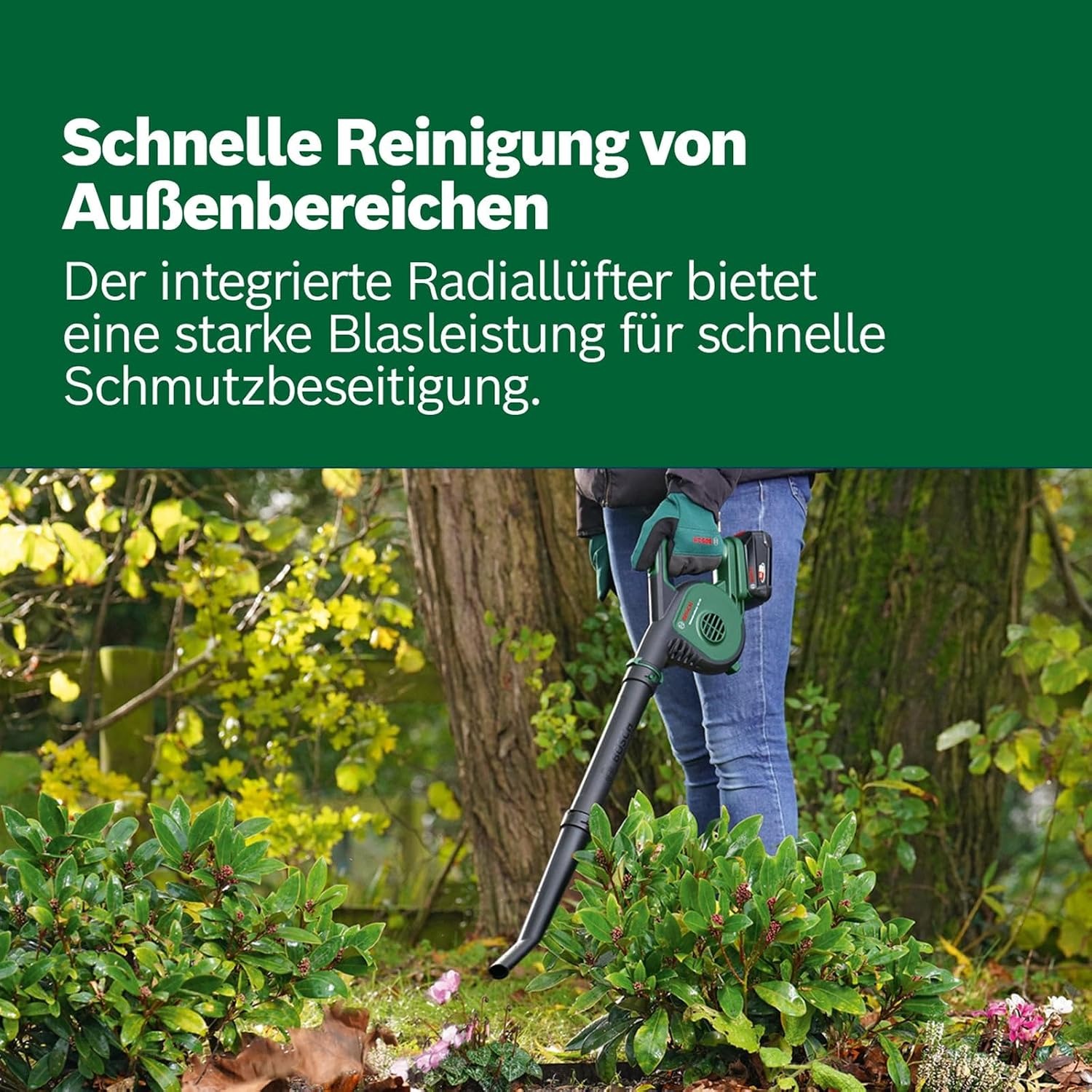
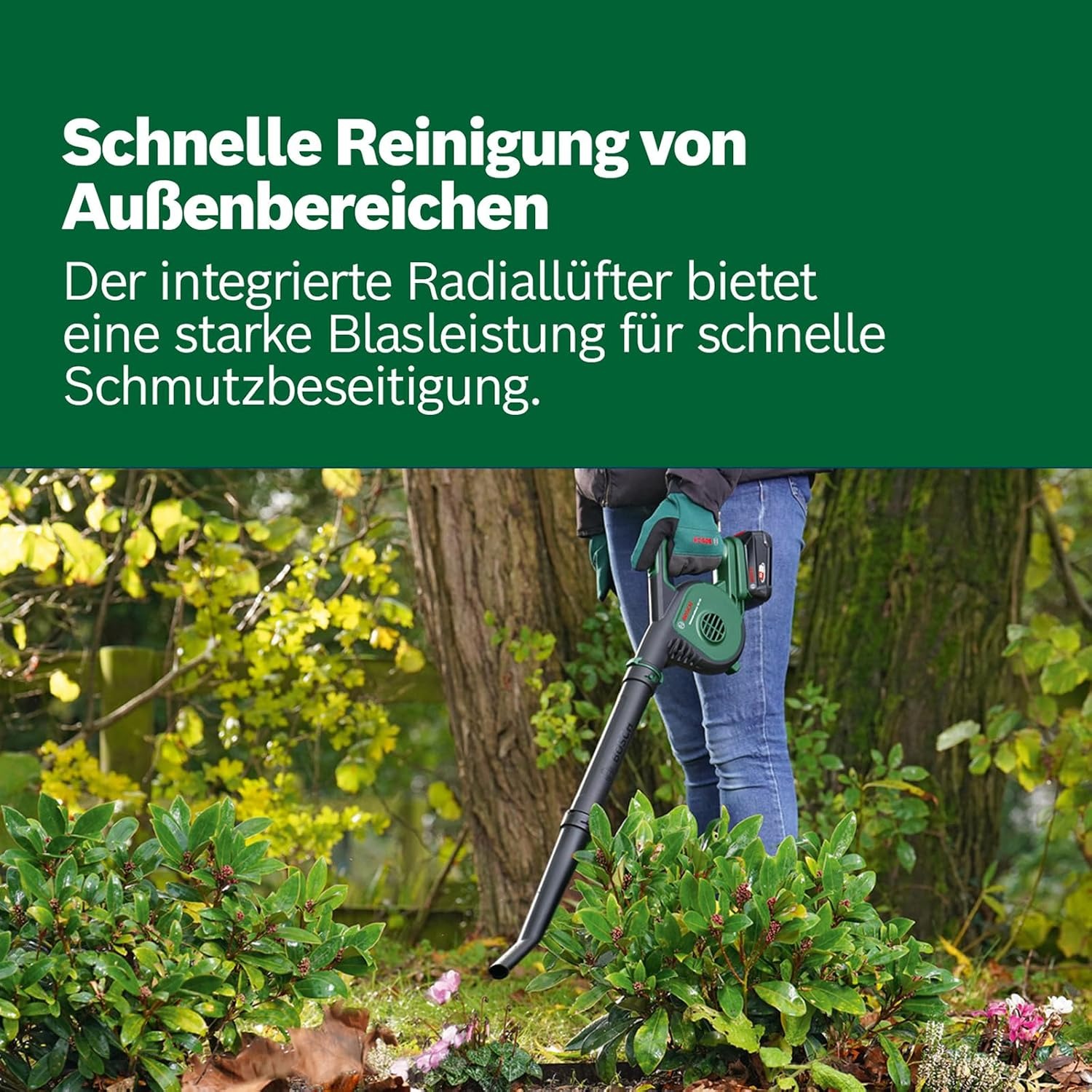
The Bosch UniversalLeafBlower 18V-130 is designed for leaf and debris clearing in smaller to medium-sized outdoor spaces. It is handheld and battery powered, with no trailing mains cord during use.
The key purchase detail is easy to miss. This is a cordless leaf blower bare tool, not a battery kit. It comes without a battery or charger. Before thinking about air speed or storage, check what you need to make the tool ready for use.
What this package gives you
The listed package contains the UniversalLeafBlower 18V-130 and carton packaging. The model number is 06008A0601. A battery and charger are not included.
That format can make sense if you already have equipment that Bosch confirms is compatible. It can also suit someone building a tool setup in stages. If you are starting from nothing, compare the full cost of the blower, battery, and charger rather than the tool price alone.
Do not assume a battery will fit because it is marked 18V or carries the same brand name. Exact supported batteries are not listed in this record. Check the model-specific guidance before ordering, especially if you are buying this as a replacement for another tool.
How a blower helps with clearing
A garden debris blower moves air to push loose material across a surface. The aim is usually to gather leaves where they are easier to collect, rather than chase each leaf around the garden.
Plan a collection point before switching on. Choose somewhere away from drains, roads, and neighbouring property. Work towards it in short sections, then collect the pile using a method suited to your garden.
Blowing is only part of the job. This record does not list a vacuum, leaf bag, or shredding function. If you want a machine that gathers leaves inside a container, check that requirement separately. This tool is described as a blower for debris removal.
Understanding the airflow figures
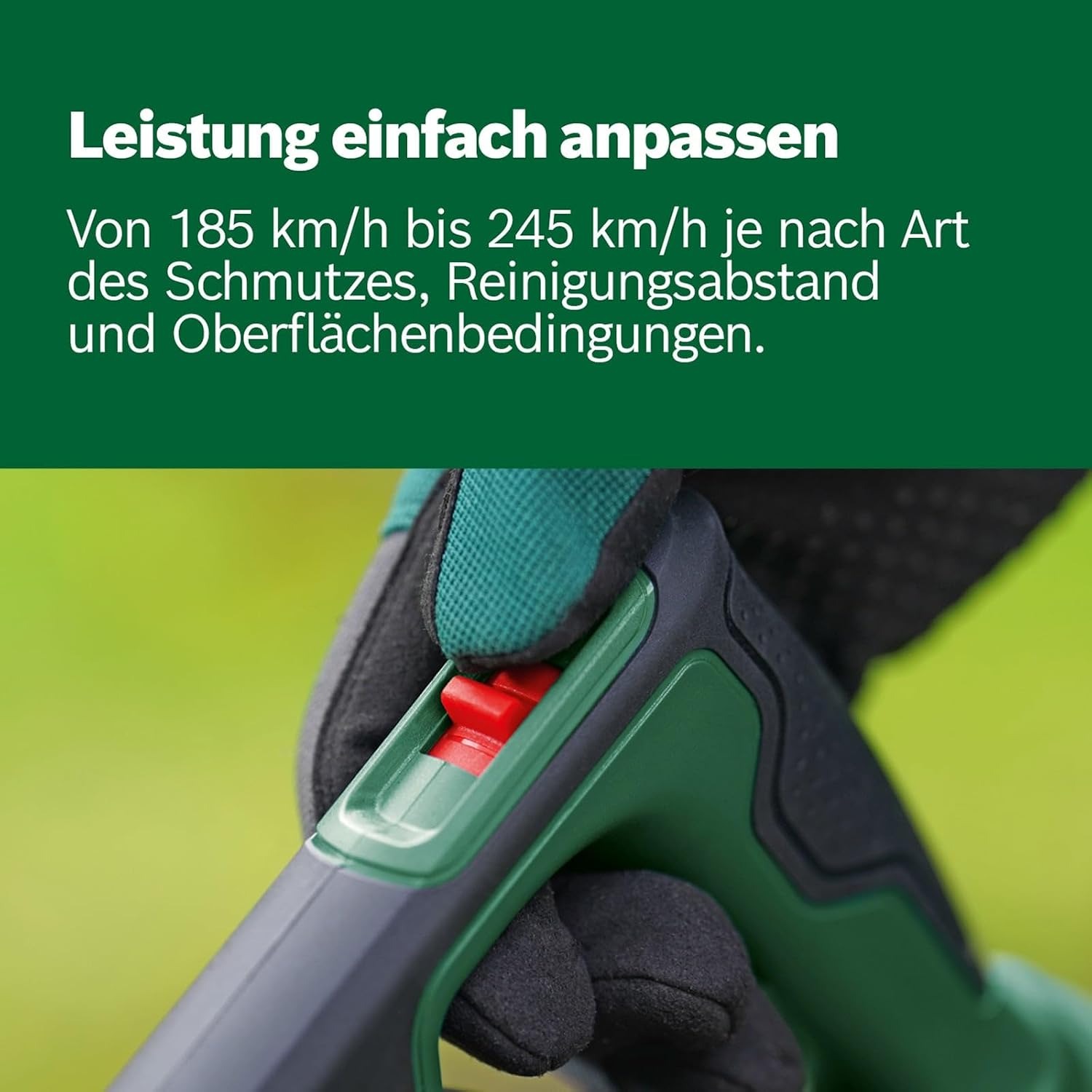
The stated air speed is 185–245 km/h, while the listed airflow volume is 130 m³/h. These figures describe different things. Air speed tells you how fast the air travels, while airflow volume tells you how much air moves over time.
Neither number tells the whole story of clearing a garden. Leaves on smooth paving behave differently from leaves caught in grass. Damp material may cling together, and debris tucked into corners can need a different approach from a loose pile.
Use the figures as part of a comparison, not as a promise that every task will be quick. The record also lists 1500 RPM, but it does not explain the speed-control arrangement. Check the manual if adjustable controls are a deciding factor.
Who this lightweight garden blower may suit
The supplier describes the tool for smaller to medium-sized spaces. It is worth considering if your usual task is gathering scattered leaves and loose debris, rather than handling large, packed accumulations.
A leaf blower for small gardens should suit both the space and the person using it. Think about narrow paths, nearby planting, and where you can safely direct the airflow. A small garden with gravel and fragile pots can need more care than a larger open area.
The handheld design may appeal if you prefer a tool you can carry between separate clearing spots. Still, comfort is personal. Consider your grip, reach, and how long you expect each session to last before deciding whether the format is right for you.
What the weight really means
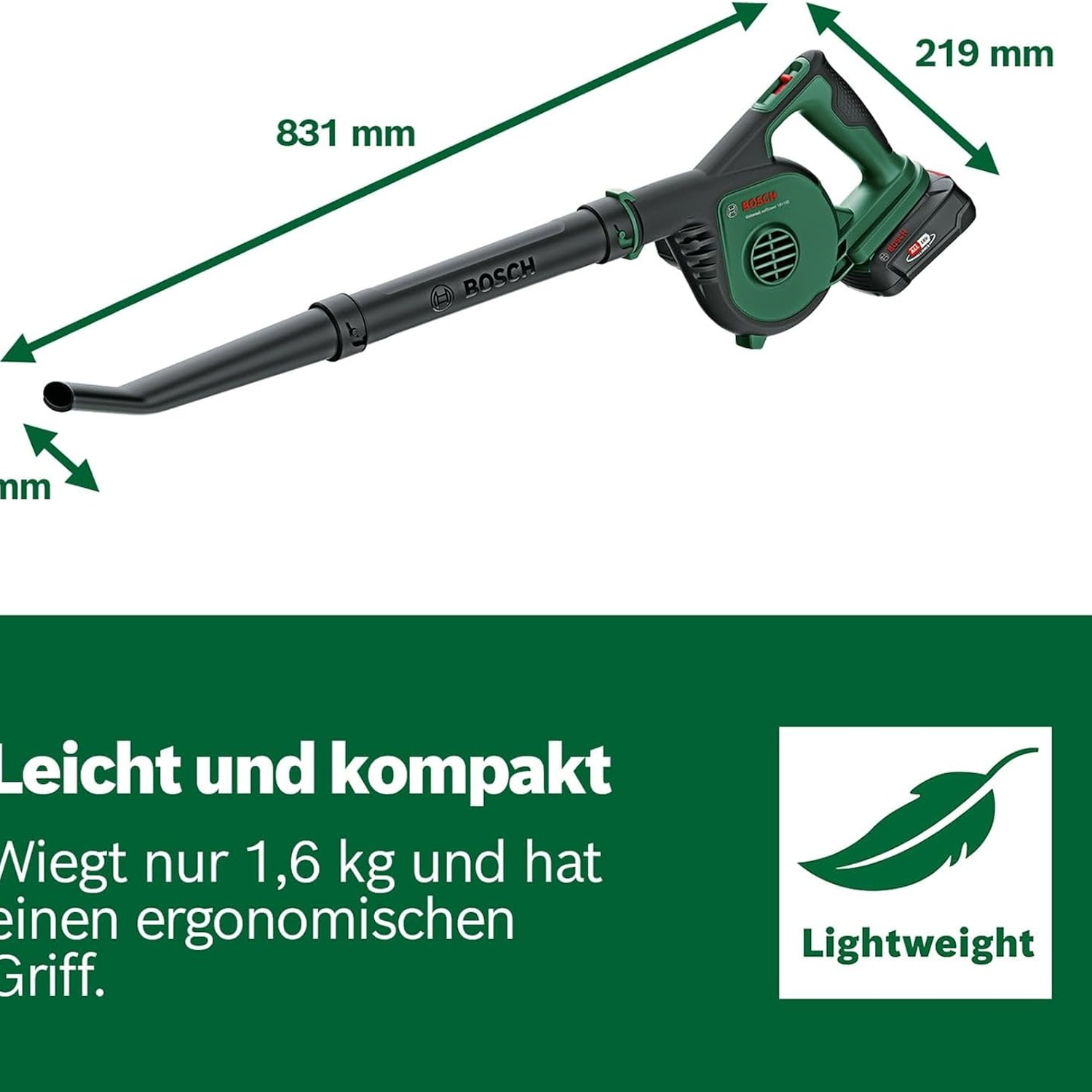
The listed 1.3 kg weight excludes the battery. This is useful when comparing tool bodies, but it is not the weight you will hold during use.
A fitted battery adds weight, and different compatible batteries may change how the tool feels. Ask about the full working weight if that matters for your comfort. Do not choose on the bare-tool figure alone.
Take breaks when needed and avoid working at an awkward reach. Move your feet rather than stretching across a bed or leaning around furniture. A lightweight leaf blower still needs to be held and directed with care, particularly when the clearing job lasts longer than expected.
Choosing a battery setup
Leaf blower battery compatibility should be settled before purchase. Confirm the exact battery models supported by the UniversalLeafBlower 18V-130, then check which charger is required.
Runtime and charging time are not specified here. If you need to finish a particular area in one session, ask for information tied to the battery you intend to use. A runtime claim for a different battery would not answer that question.
Also think about your working routine. Someone clearing a short path may have different needs from someone tidying several outdoor areas. If you already own a compatible setup, check the battery's condition and charging arrangements rather than assuming everything is ready.
Using it around paths and patios
A cordless patio blower can help move loose leaves towards a collection point, but first look at what else is on the surface. Stones, broken items, and other loose objects can become hazards when air is directed at them.
Keep people and animals away from the working area. Avoid pointing the blower towards windows, vehicles, or delicate objects. Use the safety equipment and working method set out in the manual.
Wind also matters. Choose a sensible direction so you are not pushing leaves against a breeze or sending them into a neighbour's space. A cordless blower for paths is most useful when the clearing plan includes where the leaves will finish, not just where they start.
Noise deserves a place in the decision
The listed sound power is 94 dB(A). This is a sound-power figure, not a reading taken at the user's ear. Do not use it to guess personal noise exposure or a safe working duration.
Read the manual for hearing-protection advice and other protective equipment. Local rules may also affect when powered garden tools can be used, so check those if needed.
Even a short clearing task can disturb someone nearby. Choose a considerate time and avoid unnecessary running while deciding where to work next. Battery power removes the mains cable, but it does not mean the tool is silent.
Care after each clearing session
Switch the tool off and remove the battery before inspecting or cleaning it. Wait for moving parts to stop, then follow the manual for clearing any trapped material.
Keep the air openings clear and wipe the exterior with a dry cloth. Do not hose down the tool or immerse it in water. A weather-resistance rating is not given in this record, so do not assume it is safe to leave outside or use in rain.
Store the blower in a dry place away from children. Follow the battery instructions separately, since charging and storage needs belong to the battery as well as the tool. A quick inspection after use can also help you notice damage before the next job.
Check the details that are not listed
A useful garden blower buying guide should make the gaps clear. Dimensions, construction materials, exact battery compatibility, and runtime are not specified in this record. If one of those details could change your choice, get it confirmed before paying.
Measure your storage area if space is limited. Check delivery timing for your destination, since no lead time is stated here. Read the return policy too, including any conditions that apply after opening or using the product.
The supplier details state a two-year manufacturer warranty. Confirm the applicable local terms and keep your proof of purchase. Warranty cover and a change-of-mind return policy are different things, so it is worth understanding both.
The short version
The Bosch UniversalLeafBlower 18V-130 is a handheld, battery-powered option for clearing leaves and debris from smaller to medium-sized spaces. Its stated weight is 1.3 kg without a battery, with airflow of 130 m³/h and air speed of 185–245 km/h.
Choose it with the whole setup in mind. This bare tool garden blower needs a compatible battery and charger, both purchased or supplied separately. Confirm those first, then weigh up comfort, noise, storage, and the type of clearing you actually do.